“The way Anduril places manufacturers next to their design engineers is rare in industry. The two groups can bring their best thinking to design the best possible aircraft.”
– Mary Cecile "MC" Neville, AMT – The Association For Manufacturing Technology
This is a published version of the AMT Tech Report newsletter. You can sign up to get the Tech Report in your inbox here.
Breakthroughs don’t fail because they’re impossible; they fail because execution is hard. Validation, integration, standards, discipline, and people all live in the uncomfortable middle between concept and production. This issue’s stories show what happens when teams embrace that middle instead of trying to jump over it.
1. Print It Like You Mean It
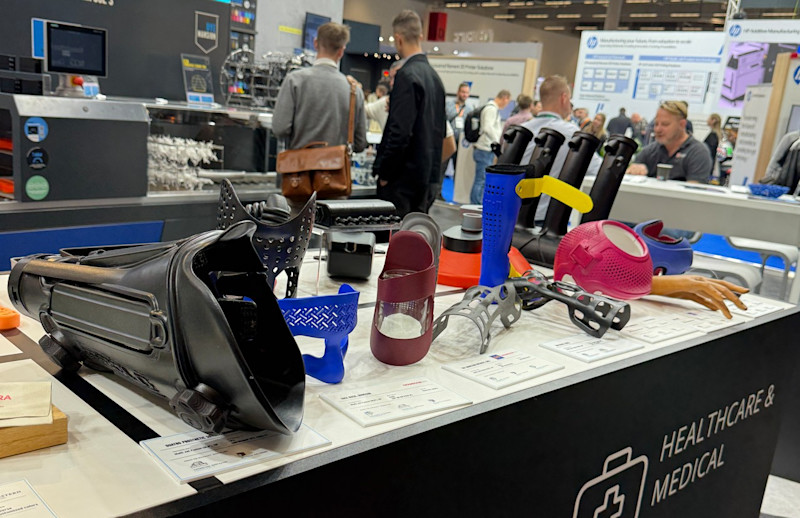
Medical additive manufacturing shines at one thing: making custom parts fast, implants, guides, models, and orthotics and prosthetics – even at a hospital. But you don’t just “print and ship.” You validate builds, control materials and postprocessing, clean and depowder, sterilize, and pick the right FDA submission lane. Then comes the other boss fight: reimbursement, which is improving but still uneven. The tech varies (from PBF to jetting), but the win is repeatable quality and traceability – not printer hype.
2. Autonomy; No Training Wheels
Anduril’s YFQ-44A Fury autonomous fighter jet flew a full mission solo, showing how software-first design, tight manufacturing integration, and rapid iteration can outpace legacy timelines. But the real story isn’t the jet; it’s the workflow: design, autonomy, and production living side by side. With human-on-the-loop control and a low-maintenance design, Fury hints at how autonomy scales when engineers and manufacturers actually talk. It looks like speed is a process problem, not a physics one.
3. Tommy Bahama and a Titanium Spine
Ron Karaisz was the rare manufacturing leader who mixed sharp instincts with real humanity. He built companies, spotted industry shifts early, and pushed peers to embrace change without losing their soul. On the AMT board, he challenged ideas calmly, listened harder than most, and kept discussions grounded in facts and respect. Ron knew adaptation wasn’t optional and proved it by helping customers evolve, not panic. While he made everyone feel like an equal, he’s become a legend who will be missed.
4. Upgraded Copper
Continuum Powders is rolling CuNi 70/30 powders into additive manufacturing with OptiPowder C715 and C964. While their strength is remarkable, making them well suited for marine, energy, and other abuse-heavy applications, they aren’t lab curiosities. They’re production-ready powders engineered for flow, chemistry control, and repeatability across LPBF, DED, binder jetting, and more. Made from reclaimed aerospace scrap, they improve supply resilience without sacrificing performance.
5. Clean Code Beats Heroics
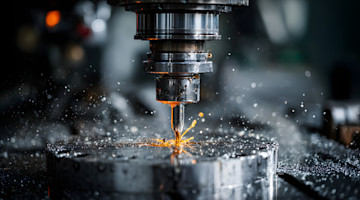
High-performing NC teams aren’t built on wizard programmers; they’re built on structure. Standardized posts, shared tool libraries, reusable templates, and mandatory simulations cut errors, speed onboarding, and keep code shop ready. Add clear headers, fixture discipline, and real runtime data, and suddenly the floor runs smoother. Tools like LimitlessCNC layer AI on top, nudging programmers toward best practices without ripping up workflows. Boring discipline; real gains.
The message here is consistent: The winners aren’t skipping the hard parts; they’re mastering them. Whether it’s medical AM, autonomous aircraft, materials, or machining, progress comes from embracing validation, integration, and discipline. The future isn’t built at the extremes. It’s built in the middle, where execution lives.
To get the latest tech developments delivered directly to your inbox, subscribe to the weekly Tech Report here.
To hear the latest in additive manufacturing, material removal, automation, and digital manufacturing, subscribe to the AMT Tech Trends podcast here.